Case study
Modality: booking and payment built into a private healthcare provider's site
Modality is a private healthcare provider serving over 450,000 patients across 8 regions, with private and NHS services delivered by 300+ specialists from 24 locations. Its private self-pay site is where patients book and pay for their own appointments. We replaced the embedded booking widget with a booking and payment journey built into Modality's own site.
- Client
- Modality
- Services
- Web development, automation & integrations
- Sector
- Outpatient and community healthcare

Patientsweredroppingoutofthebookingwidget
We first built Modality's private site through our Web Development service to bring in enquiries through contact forms, with direct booking planned as the next stage. Until then, booking ran through a widget embedded from the practice-management system, and it gave patients a poor experience at the point they were ready to book.
There was a second problem too. An earlier checkout had a timeout issue, so a patient could reach the end of the form, enter all their details and still lose the submission. Between the widget and the timeout, patients who had already chosen a service were leaving before their booking went through. For a provider of Modality's size, that's a lot of bookings lost at the final step.

WebuiltbookingandpaymentintoModality'sownsite
We took the widget out and built the booking journey into Modality's own pages, using WordPress and Gravity Forms. Stripe takes the payment, so patients book and pay in one go.

The connection to Semble
Behind the form, we set up an Automation & Integrations connection to Semble, Modality's practice-management system, through its GraphQL API, so each booking goes straight into the system the team already uses.

Forms grouped by service
The forms are grouped by service, so patients only see the booking options for what they came to the site for.

The form fills in the location
If they arrive from a service or location page, the form fills in the location for them, which saves a step for patients choosing between Modality's many sites.
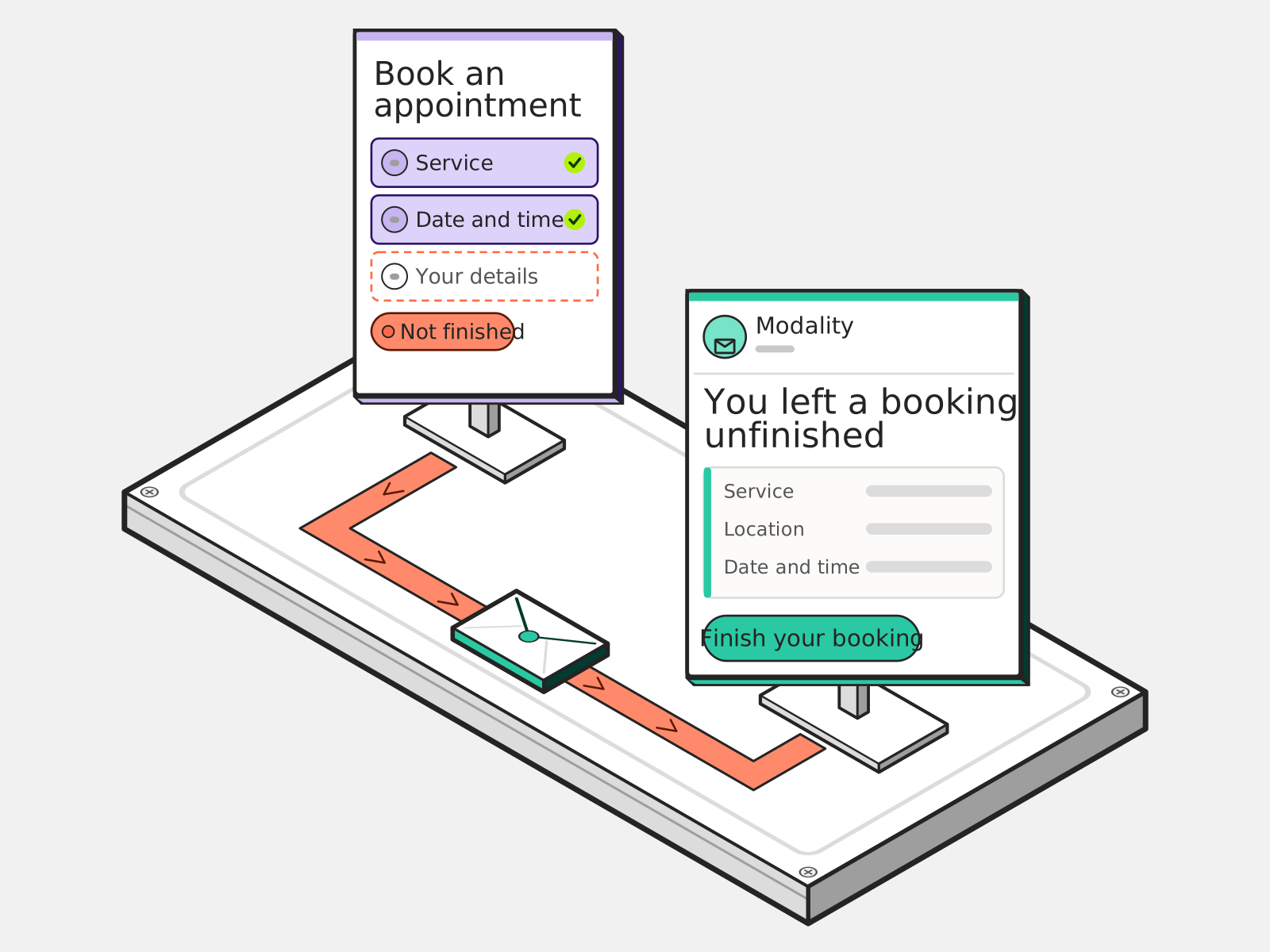
Abandoned-cart recovery email
And if someone starts a booking but doesn't finish, an abandoned-cart recovery email reminds them of the appointment they left, giving Modality a second chance at that booking.

Taking payment before the booking is made
The booking, the patient record and the invoice are only created in Semble once Stripe confirms the payment. An abandoned checkout holds no slot, a failed payment leaves no appointment behind, and the earlier checkout timeout is fixed.

Whatchanged
Patients now book and pay on Modality's own pages in one go, and bookings are up 43%. Nothing goes into the Semble diary until Stripe confirms the payment, so the diary only holds paid appointments and the old checkout timeout is gone.
An Automation & Integrations connection to Semble, Modality's practice-management system, through its GraphQL API.
The booking, patient record and invoice are only created in Semble once Stripe confirms the payment, so an abandoned checkout never holds a slot.
Patients only see the options for the service they came for, and the location is filled in from the page they arrived on, so there are fewer steps to an appointment.
If someone starts a booking but doesn't finish, an email reminds them of the appointment they left and invites them back to complete it.

- More bookings
- +43%


